What Is Artificial Intelligence? A Beginner’s Guide

June 22, 2026
June 22, 2026
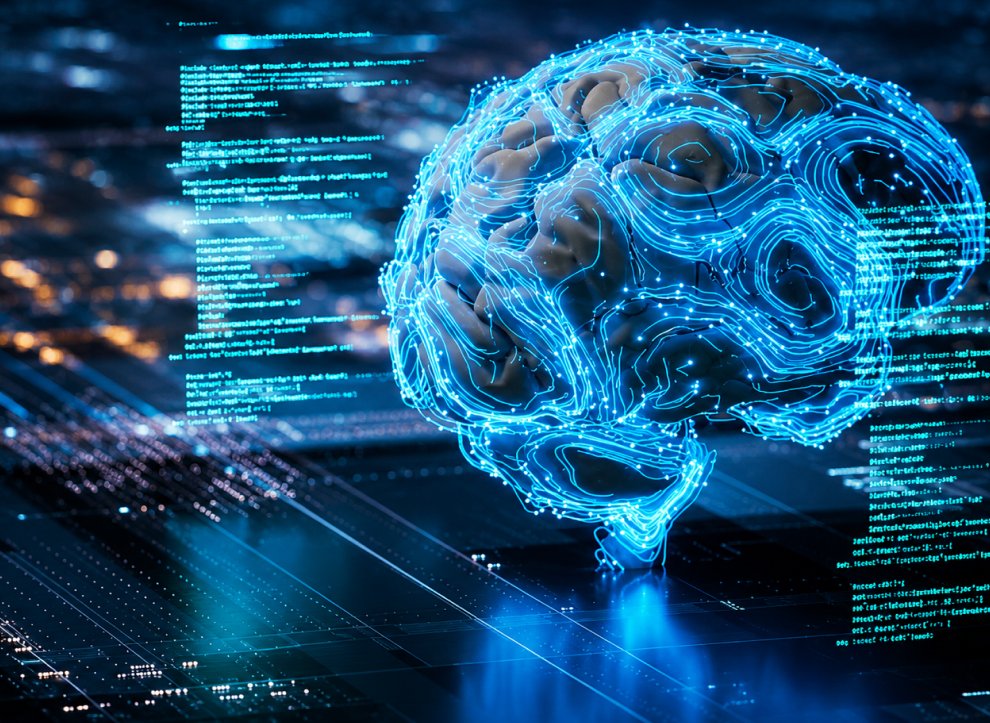
It is obvious nowadays to come across artificial intelligence technology everywhere from recommending the next film you may like to managing your inbox. AI is employed at doctors for disease diagnosis, used to help you communicate with bots on websites, write codes for programmers, even generate graphics, and to summarize information. But surprisingly, very few people will manage to explain just what artificial intelligence is.
So what is AI?
Here is some info you’d want to know about artificial intelligence, covering how AI works and all the kinds of AI that there currently are, what kinds of technology made AI expand quickly over last few years, and the meaning for yourself at your workplace and our world at large. You can read on whether you already hold zero skills in the technical field or simply wanna improve ur understanding, here is a perfect spot for this.
AI simply refers to computer devices designed to assist humans with jobs they could perform better using AI intelligence. These activities range from understanding spoken language, identifying patterns, coming up with solutions, deciding, making problem fixes and even producing. For instance, AI was originally coined in 1956 by a computer science professor known as John McCarthy and he explained it as an art and engineering of creating intelligent devices, a concept which is still applicable even if AI capabilities these days outsmart anything McCarthy’s contemporaries could have imagined. For easy comprehension for starters, I can say that AI is essentially software that is capable of learning from its previous activities, getting accustomed to novel activities and carrying out tasks in ways similar to humans using diverse degrees of freedom.
What AI Is Not
It’s quite common that most humans think that there could be robot warfare or computer systems plotting a coup on the human race, or even machines wishing for things – in reality, all these thoughts have become popularized by fiction movies. Current AI solutions as we know them today in 2026 and going on have become significantly more and more customized and much more functional. They are computer solutions designed to fix clearly defined problems. These systems aren’t sentimental, never yearning for anything nor have any type of awareness – and it’s paramount that we all make this difference.
AI hasn’t all of the sudden came to existence , it’s been worked upon by researchers and scientists for quite a while, and several failed but also important attempts and milestones have gone into building it into what it is today.
It is vital to keep this background in mind, since artificial intelligence wasn’t a phenomenon, but rather an ongoing advancement from numerous research over decades that has finally achieved greater leaps thanks to greater processing power and available big data sets.
Modern-day computer intelligence usually functions by studying massive amounts of data. It is actually not explicitly built with instructions, but computer systems are instead fed enormous numbers of examples and learn on how to distinguish patterns to form predictions based on the gathered examples. This is fundamentally different from the standard computers whose instructions are given directly by the engineers coding the application.
Machine Learning: The Engine of Modern AI
Machine learning (ML) is the most vital part of computer intelligence today. With machine learning systems, computer programs are supplied with a quantity of data and instructions about a desired result. Based on feedback received about the outcomes, adjustments are made to their interior parameters, referred to as weights, until the optimal result is reached.
For example, to create a device to detect cats in photographs, numerous images, where the ones with cats were labelled “Cat” and the ones without were labelled “Not Cat,” would be input into the device, until it was perfectly trained to be able to detect photos of cats, even photos that had never been seen previously.
Deep Learning and Neural Networks
Machine learning has two specific variations, which are deep learning and neural networks. Deep learning has a unique architecture modeled in a similar manner to the way the human brain works, using numerous “layers” that successively refine the input.
Image identification that can distinguish a cat from a tiger accurately, like a human eye can do, speech recognition that enabled technologies like Siri or Alexia, and language systems that produce natural-language content – most of the best artificial intelligence achievements of the past decade or so were a result of deep learning and its ability to process images of any kind.
Large Language Models (LLMs)
Large language models are the basic technology responsible for creating the AI chatbots that many of us encounter now, like Gemini, Claude, or ChatGPT. They learn from vast quantities of information- the enormous volume of web text as well as articles and books and are tasked with predicting the following word in a sentence.
On the top of these basic structures, systems are able to generate text in a surprisingly fluent manner and also translate, summarize, and carry out basic reasoning. However, LLMs do not “know” facts about anything; they only generate response by predicting words based on learned text patterns.
When you talk about artificial intelligence, there is no single thing; there are many varied and widespread methods. It’s crucial to grasp the overarching categories.
Narrow AI (Weak AI)
Narrow AI are trained on single specific functions, and these are where narrow AI works well. All AI systems available today that are in widespread use, are narrow AI. The machine that filters your spam messages as you type out e-mails, that is an AI system capable of classification and nothing else.
Similarly, the prediction engine that helps a given recommendation algorithm decide what you want to watch next, and the system which enables a self-driving car module to recognize obstacles in the road.
The machine that plays your favorite strategy games, that system too is narrow AI. However, if our self-driving module (and only if!) can learn object detection on the road.
General AI (Strong AI)
The concept of general AI describes a hypothetical artificial system capable of any cognitive task which can be performed by an intelligent being, human beings at least. Currently, no general AI exists, it stays a theoretical notion among those who are working on the artificial intelligence concept.
Generative AI
A particular brand of AI used to construct new content–from textual output to still images or music. It’s used for things like writing applications (ChatGPT and similar), image generation tools (DALL-E or Midjourney), videos and coding assistance tools(Sora, Github Copilot). Because it was the cause of the AI explosion beginning from deep learning that allowed anyone to generate complex AI output, without a deep technical background. This has had its major impact.
Supervised, Unsupervised, and Reinforcement Learning
Here are a number of terms you are sure to repeatedly encounter on your dive deeper into AI.
Natural Language Processing (NLP)
The field within artificial intelligence concerning the interaction between computers and humans through language. Machine translation systems that automatically translate words, to voice assistants, to applications like text summarization tools that enable better comprehension among users-these all are practical applications of NLP. The most advanced LLMs currently in use build upon earlier progress in NLP research.
Computer Vision
AI application, concerned with how to compute and interpret a meaningful high-level understanding of the visual world from a 2-D picture or a video, or else produce it -that is the result the “intelligent machine.” This involves the machine that perceives images, its analysis and the overall comprehension. Applications for computer vision ranges from self-driving car technology, to medical analysis of medical images and other imaging techniques, object identification, face recognition, or quality assurance technologies, etc.
The Transformer Architecture
It’s been since the development of the transformer architecture that the new wave of huge language models is made possible. This uses an ‘attention mechanism’ which allows it to assign different weights to the individual pieces of data in its input in order to generate each component of its output. Most of the biggest language models have implemented transformer designs — those that drive AI products from firms including Google (their latest large models), OpenAI and others.
Training Data
Machine learning algorithms learn their tasks by processing data; data that must have the correct features to guide them through their learning process. When the training data set is inadequate, and if its quality, diversity, and breadth do not match up to the level expected, the resulting AI product is going to be inefficient in one manner or another. The right quality of data, quantity and even diverse variety can also assist in preventing any possible biases from being present in the data, which, in turn, makes AI biased if it’s not balanced.
Parameters and Model Size
Large Language Models are usually described as to the number of parameters they carry, that is, a count of adjustables numeric variables that make up the ML model. GPT-4 carries some trillion parameters, some reports claim this. The trend is that greater size brings better performance but at increased complexity, that’s the tradeoff between parameters & ML model performance. Nevertheless, these parameters and how it correlates with performance isn’t linear in an obvious manner.
The application of AI spans across many and almost all of the industries. Knowing where these apply helps understand the impact AI is having currently on these many industries:
Healthcare
Models matched the expertise of the specialists in identifying diseases within X-rays, MRIs, and other scans – among the key advances for in AI. These systems identified things such as diabetic retinopathy, skin cancer and some types of lung diseases – some times even faster than human specialists. They also sped up the discovery process for new drugs and a variety of therapies.AI models are finding patients who will need to be closely monitored before obvious clinical signs show any ill health that’s how some new therapies and medical systems can be built from those early findings. And assisting them on their job. Administrative work on their side. AI can relieve medical professionals by assisting them in medical image analyses, or helping out clinical notes.
Finance
Automated Fraudulent System that process up to a million dollars each and minute, and help find the unusual anomalies that human reviewers cannot find and will fail to find if this continues. High Speed Algorithmic Trading – trades a millions shares per second, human speed cannot match that. High Speed Credit Scoring — A modern FICO-equivalent assesses a applicants credit score more extensively than older credit scoring techniques. Chatbot support with 20 per cent automated-query handled.
Education
Adaptive learning systems will respond to the student’s progress. Interactive education platform will prompt real-time feedback for homework assignments. Assessment tools will allow the analysis of the student response over time. AI in teaching, curriculum development, Personalized Professional development.
Creative Industries
Generative AI produces images, music, video scripts, and marketing copy. This creates genuine opportunity — AI as a creative collaborator and productivity tool — alongside genuine disruption for those whose work it can replace or commoditise. The most effective creative professionals in 2026 are those who use AI as a creative multiplier rather than competing against it.
Software Development
AI can help in writing codes (with a little aid of programming and writing skills), identifying and resolving errors, creating tests as well as helping review pull requests to help improve code quality; studies reveal the improvement of coding efficiency by an additional 20%.
However the usage of AI is increasing, but it is vital to look into all possible drawbacks of it and take a neutral stance; The risk factors include –
AI is not a technology of the future, it’s one of the present, reshaping and remaking industries, job roles, and possibilities at an accelerating rate. Understanding what AI is, how it works, and where it’s being used is no longer merely interesting information for a tech enthusiast. It’s now required knowledge, as fundamental as knowing how to use a spreadsheet or a word processor, for anyone working professionally in 2026.
This overview covered the definition and history of AI, the mechanism behind machine learning and deep learning, the main forms of artificial intelligence, the technologies behind its recent advancements, the areas currently benefiting from AI, and the true constraints of AI.
The key insight you’re meant to extract from this resource is not a factual tidbit, but a healthy approach to AI itself. Artificial intelligence is, indeed, a remarkably powerful instrument, but one that possesses limitations and risks that must not be ignored. Those who will most successfully thrive during the AI era are those who both possess a solid grasp of how to leverage the tool effectively, are willing to critically assess its application and development, and feel engaged with the ethical questions it prompts.
Classpedia’s AI & Generative AI Fundamentals is here to bring your comprehension from the conceptual base to applied, skill-based training covering large language models, prompt engineering, and use cases for businesses everywhere.
 Table of Content
A simple, guided process designed to help you learn efficiently, track progress, and earn a recognized professional certificate.
Start building in-demand skills designed to help you grow faster. Unlock advanced learning tools.
Explore Courses Home
Home
 22-Jun-2026
 12:52 PM